Can an Algorithm Write a Sitcom That Makes Humans Truly Laugh?
Notes for the pilot episode of our planned audio show: what comedy writers say machines get wrong about timing, character and surprise. The audio edition is coming soon.
Clara Vance
Culture Editor • • 4 min read
The quick take
- 1Timing is the hard partComedy lives in rhythm and pauses, which text-trained tools struggle to feel.
- 2Tools can assistAlternate jokes and punch-up passes are where writers find the most practical help.
- 3Character beats clevernessA funny line from a consistent character lands harder than a clever line from nowhere.
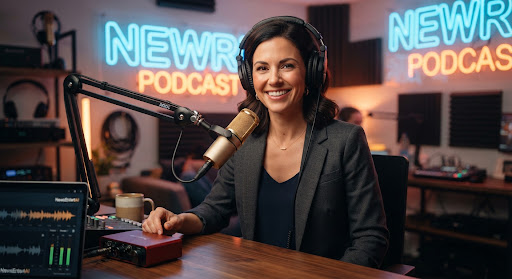
These are the planning notes for the pilot episode of NewsEntertAI's planned audio show. To be clear, the podcast does not exist yet: the audio edition is coming soon, and nothing here is a recording. What follows is the outline and the conversations we intend to have, written up in advance so you can see where we are headed. As with all launch edition content, the guests below are fictional and the discussion is illustrative.
The question for the pilot
Can an algorithm write a sitcom that makes humans truly laugh? We plan to put the question to two guests. The first is Dev Marlowe, a comedy writer who has spent years in writers' rooms, pitching, rewriting and surviving table reads that go quiet in all the wrong places. The second is Dr. Ines Vartanian, a computational humor researcher at the fictional Hollowell Institute, who studies why jokes work and how software might model that.
The host's job is not to settle the matter. It is to find where the real disagreements live.
Setups, payoffs and the shape of a joke
A joke is a small machine with a hidden mechanism. A setup builds an expectation, and a payoff breaks it in a way that is surprising yet feels inevitable afterward. We want Dev to walk through how a room builds one, including the unglamorous part where a single word is swapped fifteen times.
Dr. Vartanian will give the research view. Language tools are good at patterns, and many jokes follow patterns, so they can produce text that has the outline of a joke. What they often miss, she is expected to argue, is the specific surprise. A tool trained on what people usually say tends to drift toward what is probable, and comedy needs the improbable thing that still makes sense.
Timing, rhythm and the silent beat
On the page, a joke is words. In a room, it is also a breath, a look and a pause that is exactly one beat too long. Writers think in rhythm: short, short, long. The final word of a line matters because it carries the laugh. Moving it a single position can kill a line.
We will ask both guests whether a machine can learn timing from text alone. Our guess, which the episode will test, is that it can approximate rhythm but cannot feel the audience. Timing is a conversation with the people watching, and a script written without that conversation can read flat even when every line is technically fine.
Character voice
The best sitcoms are not collections of jokes. They are collections of people who are funny in their own distinctive way. A pompous neighbor does not make the same joke as an anxious roommate. When a character says something, we laugh partly because it is exactly what that person would say, at the worst possible moment.
Dev is likely to make the point that character consistency over many episodes is hard even for humans, which is why shows keep a bible. Dr. Vartanian can speak to how tools lose track of a voice across long stretches. We would like to explore whether a writer-authored character guide, fed to a tool, helps or merely produces imitation.
The writers' room, and where tools might help
We do not want the episode to be a funeral for a straw machine, nor a sales pitch. So the middle section looks at practical uses. Likely candidates include:
- Alternate jokes. Asking for twenty versions of a line, knowing nineteen are weak, to spark a better human one.
- Punch-up. Offering variations on a scene's ending when the room is tired and the deadline is close.
- Tag ideas. Short extra jokes after a scene's main laugh.
- Research and names. Quickly listing plausible job titles, places or catchphrases for a new character.
And where tools fail: building an emotional arc across a season, noticing that a joke is cruel in a way the audience will not forgive, and knowing when to cut a funny line because the scene needs silence.
Questions we will ask
- What is the difference between a joke that is clever and a joke that is funny?
- Can surprise be taught to software, or is it always borrowed from people?
- Who is credited, and who gets paid, when a tool contributes a line that makes it to air?
- Would you tell the audience a script was tool-assisted?
- What would change your mind?
What to expect, and when
This is a planning document, not an episode. We have not recorded the pilot, and we are not promising a date beyond coming soon. When the audio is ready, it will be announced on the site. If you have a question you would like us to put to the guests, or you are a comedy writer with a strong opinion, write to [email protected].
In the meantime, try an experiment at home. Take a favorite scene from a show you love, and rewrite one joke three ways. Notice which version makes you smile, then ask why. That small act of noticing is, we suspect, the whole subject of the episode.
Launch edition note: this is an illustrative story. The studios, platforms, people and events are fictional. See our disclosure protocol.
Clara Vance
Culture Editor at NewsEntertAI. Launch-edition byline. Spotted an error? Tell us.