Hollywood's First Full-Length Generative Sci-Fi Epic Enters Awards Contention
Inside the 18-month indie production where prompt engineers, VFX veterans and neural animation tools built a feature that is now in the awards conversation. We break down the shot pipeline, likeness clearances and the voting debate.
Sarah Lin
Senior Tech Editor • • 4 min read
The quick take
- 1Human at every handoffThe pipeline ran from storyboards to prompt previs, generated plates and human compositing and grading.
- 2Likeness by contractActors drove performances through capture and signed explicit, scoped likeness agreements.
- 3Rules are unsettledThe guild is still debating whether eligibility should hinge on authorship, disclosure or the capture method.
Every awards season produces a film that forces the rules to be rewritten. This year, that film is Meridian Drift, a generative sci-fi epic from the independent outfit Halcyon Reel Studios, directed by Imogen Castell. It is a long, ambitious feature about a salvage crew chasing a drifting colony ship, and it was built by a hybrid team of prompt engineers, veteran VFX artists, editors and performers. It is also, awkwardly for everyone involved, now in the conversation at the Screen Arts Guild Awards. Please note that this is an illustrative launch-edition story: the studio, the film and the people in it are fictional.
From storyboard to finished shot
Castell is quick to say that the film was not "typed into existence." Her team describes a pipeline with a human at every handoff. It began, as most films do, with drawings. Storyboard artists sketched each sequence, and those boards became the visual contract for everything downstream.
Next came prompt previsualization. Instead of crude grey-box animation, the team wrote structured prompts, paired with the boards, to generate moving previews of each scene. These previews were deliberately rough and disposable. Their job was to answer questions: does this camera move work, does the corridor feel claustrophobic enough, is the reveal too early?
Once a sequence was locked, the team generated plates: the raw background and effects layers that would populate the final frame. A single shot often required many attempts, and the team kept a log of what was kept and why. Weak plates were thrown out for reasons any cinematographer would recognize, such as inconsistent lighting, drifting faces or physics that felt wrong.
The last stage is where the human craft is most visible. Compositors assembled the chosen plates, repaired seams, matched grain and motion blur, and handed shots to a colorist for the final grade. A VFX supervisor on the project, speaking for this story as a fictional composite voice, put it plainly:
The model gives you a very talented intern who never sleeps and occasionally forgets the plot. The film is what happens after you correct it.
Performance and likeness
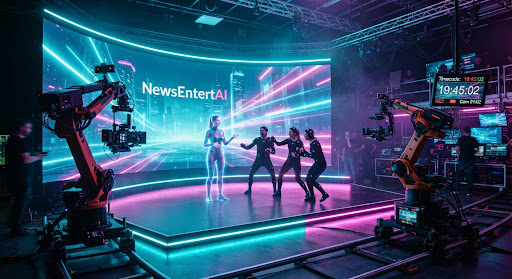
The most important decision, according to the production, was keeping real actors in the loop. The lead performances were captured on a small stage using performance capture, and the actors' movements and expressions drove the characters on screen. Their faces and voices were not generated from scratch, and no performer's likeness was used beyond what they had agreed to.
Each actor signed an explicit likeness contract. The documents, as described by the producers, covered what the studio could generate from the capture sessions, where that material could appear, how long the permission lasted and what happened to the underlying data afterward. They also included a right to review certain generated scenes. This is general information about how such agreements are structured and not legal advice, but the approach is becoming a template that other productions are studying.
- Scope: contracts named the specific film, not "any future project."
- Review: performers could flag scenes where a generated version of them felt wrong.
- Deletion: capture data was to be removed or locked down after delivery.
- Credit: performers are credited as performers, not as "reference."
The eligibility debate
Then came awards season. The Screen Arts Guild Awards have long-standing categories for cinematography, visual effects, editing and performance, and each assumes something about how the work was made. Members have been arguing in screening rooms and group chats about what those assumptions mean when a large share of the imagery was synthesized.
One camp argues that the rules should focus on authorship and decision-making. If a cinematographer chose the framing, lighting direction and lens language, and then curated and corrected the output, the work reflects cinematographic judgment even if no physical camera was involved. Another camp counters that a camera award is, at heart, about capturing light in the real world, and that blurring the line cheapens the craft.
A third group wants a disclosure-first approach. Under that model, any submission using generative imagery would file a process statement describing which stages used generation, which were human-made and who made the creative decisions. Voters could weigh that information however they choose. Critics reply that voters rarely read paperwork and that a statement is easy to polish and hard to verify.
The guild has not announced a final ruling, and for now Meridian Drift sits in a gray zone. Halcyon's producers say they will accept whatever categories the guild decides are appropriate, including none at all.
What it means for filmmakers
Whatever happens in the voting, the production offers a few lessons that apply well beyond one film.
- Document everything. A shot log, prompt history and approvals trail make later eligibility questions far easier to answer.
- Contract early. Likeness terms agreed before capture are cheaper and kinder than terms negotiated afterward.
- Keep humans in the creative chain. The film's strongest defenders point to concrete human choices, not to the technology.
- Expect the rules to move. Guilds, festivals and distributors are all drafting policy in public, and it will change.
It is tempting to treat a story like this as a verdict on whether generative cinema is "real" filmmaking. That framing misses the more interesting point. Audiences have always cared about what a film makes them feel, and creators have always cared about getting credit for their choices. The tools changed; the arguments about credit, consent and craft did not. Meridian Drift may or may not collect a trophy, but it has already done something harder: it forced a room full of professionals to say, out loud, what they think an award is for.
We will follow the guild's decision as it develops and update this story when there is something concrete to report. If you worked on the film, or on a similar production, and want to correct or add to what we have written, write to [email protected].
Launch edition note: this is an illustrative story. The studios, platforms, people and events are fictional. See our disclosure protocol.
Sarah Lin
Senior Tech Editor at NewsEntertAI. Launch-edition byline. Spotted an error? Tell us.